
KindScore — Rating of impact to people, animals and planet
Dive & Snorkel - Agincourt & Opal Reefs
Strong environmental credentials and animal welfare practices undercut by opaque labour standards and unplanned reef disturbance from vessel relocation.
One by one we take our giant step from the boat’s custom-built swim step into the calm and crystal clear water, bracing ourselves as the cold quickly seeps through our wetsuits. The Dive Master gives the signal and together we let the air out of our BCDs, descending down the swim line into an incredibly vibrant world of blossoming corals and darting fish, with some of the best visibility of any dive I’ve been on. Soon we’re drifting alongside a great coral wall, eagerly pointing out clownfish, pufferfish, shrimps and rays. This is the experience of diving the Great Barrier Reef with Calypso Reef Cruises.
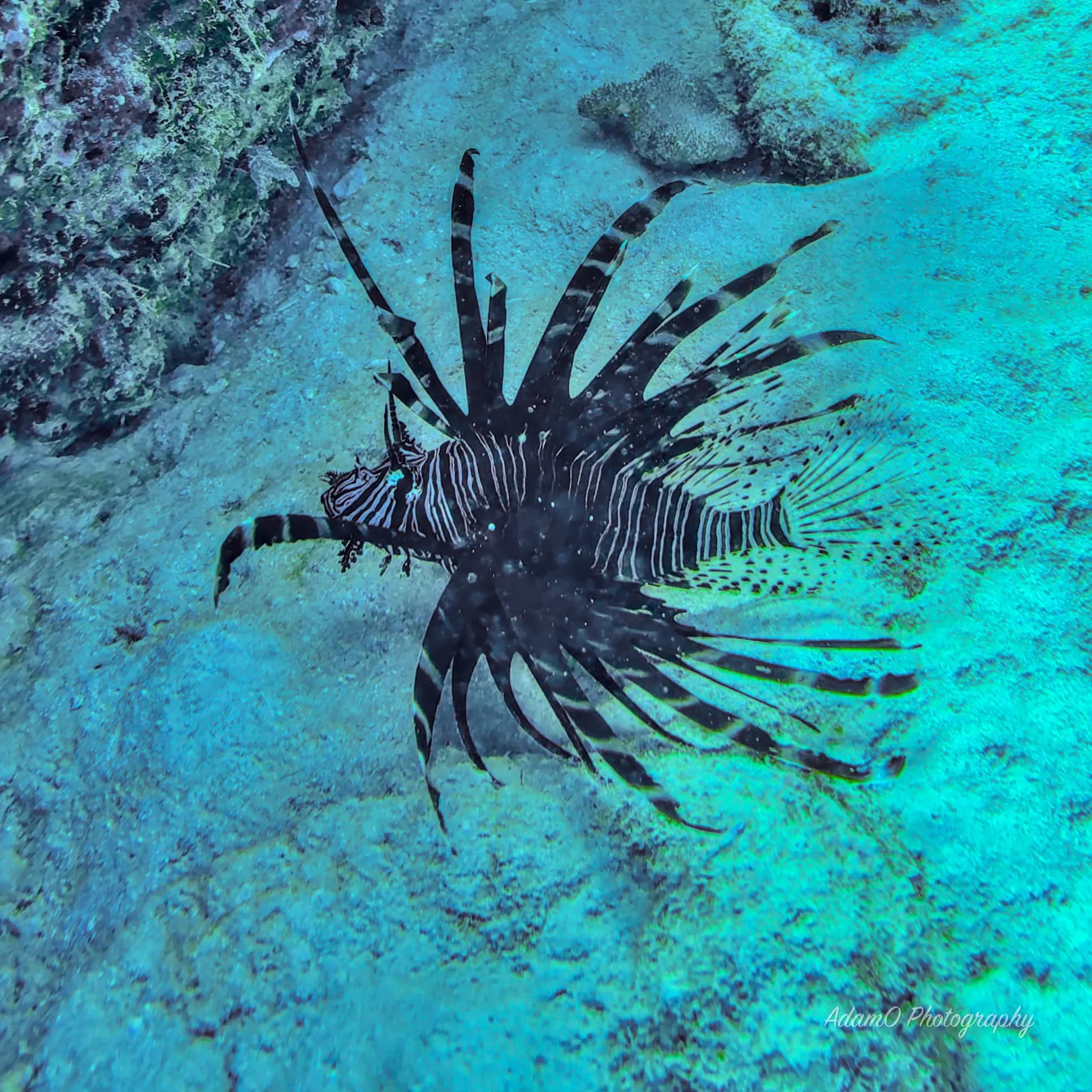
Lionfish are part of the natural ecosystem balance of the Great Barrier Reef
What to know before you go
- •Price: We paid around $450 per person for 3 dives
- ◦$329 AUD per person for the boat trip in peak season ($319 off-peak)
- ◦Plus $81 for one certified dive and around $20 extra for each additional dive
- ◦
- •Dive level: Offers separate introductory dives and certified dives
- •Group size: 4 per Dive Master on introductory dives and 7 per Dive Master for certified divers
- •Dive sites: Up to 3 outer reef sites at Agincourt Reef and Opal Reef
- •Schedule: Boarding starts 8:20am, return to port around 4:30pm
- ◦Approx. 90 minutes boat ride to dive sites
- ◦Includes lunch, morning and afternoon tea, all dive and snorkel gear and wetsuits
- ◦
- •Safety: Thorough safety briefing before dives
- ◦Minimum diving age is 12
- ◦It is recommended that you don’t fly for 12 hours after a single dive, or 24 hours after multiple dives
- ◦
- •Ecotourism: Holds Advanced Ecotourism and Climate Action Certifications
The above information was accurate for our dive experience in July 2026.
Diving the Great Barrier Reef from Port Douglas
The diving experience was one of the best and most personal I’ve had, with small groups and experienced Dive Masters. Calypso’s boat is built with a full-width submerged swim platform, allowing exceptionally easy entry to and exit from the water. While the ride to the reef was a little choppy, the conditions on the reef itself couldn’t have been more calm, and there was no discernible current at any of the dive sites. If you’re a beginner looking for easy scuba diving from Port Douglas, near Cairns, then Calypso is a fantastic option.
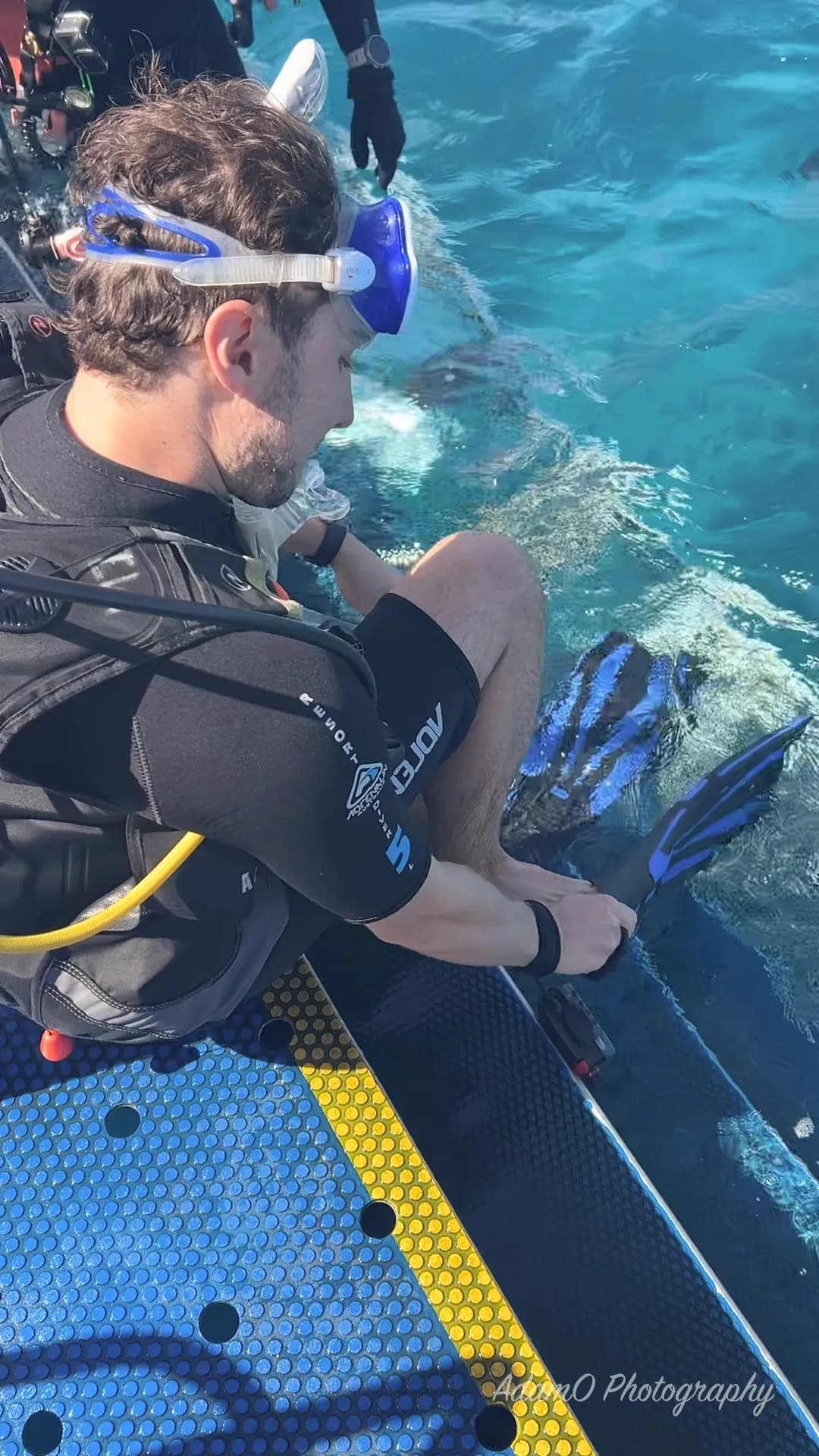
The dedicated swim platform made water entry and exit a breeze
If the idea of 3 scuba dives back to back doesn’t appeal to you, don’t worry, because you can choose to snorkel at any of the 3 sites visited in a day. With incredible water clarity and a lot of the reef coming up all the way to the surface, there’s still plenty to see if you want to snorkel the Great Barrier Reef.
It should also be noted that the crew provided a top-notch safety briefing and clear briefings before each of the 3 dives, and were ready to make sure even nervous divers felt at ease.
Marine life we saw
If you’re wondering whether we found Nemo, the answer is yes - quite a lot of them. There’s clownfish all over the reef, hiding out in any available anemone. It’s still not fully understood how they survive the anemone’s poison, but their symbiotic relationship relies on the clownfish’s bright colours attracting other fish into the anemone, which are killed by the poison and eaten by the anemone.
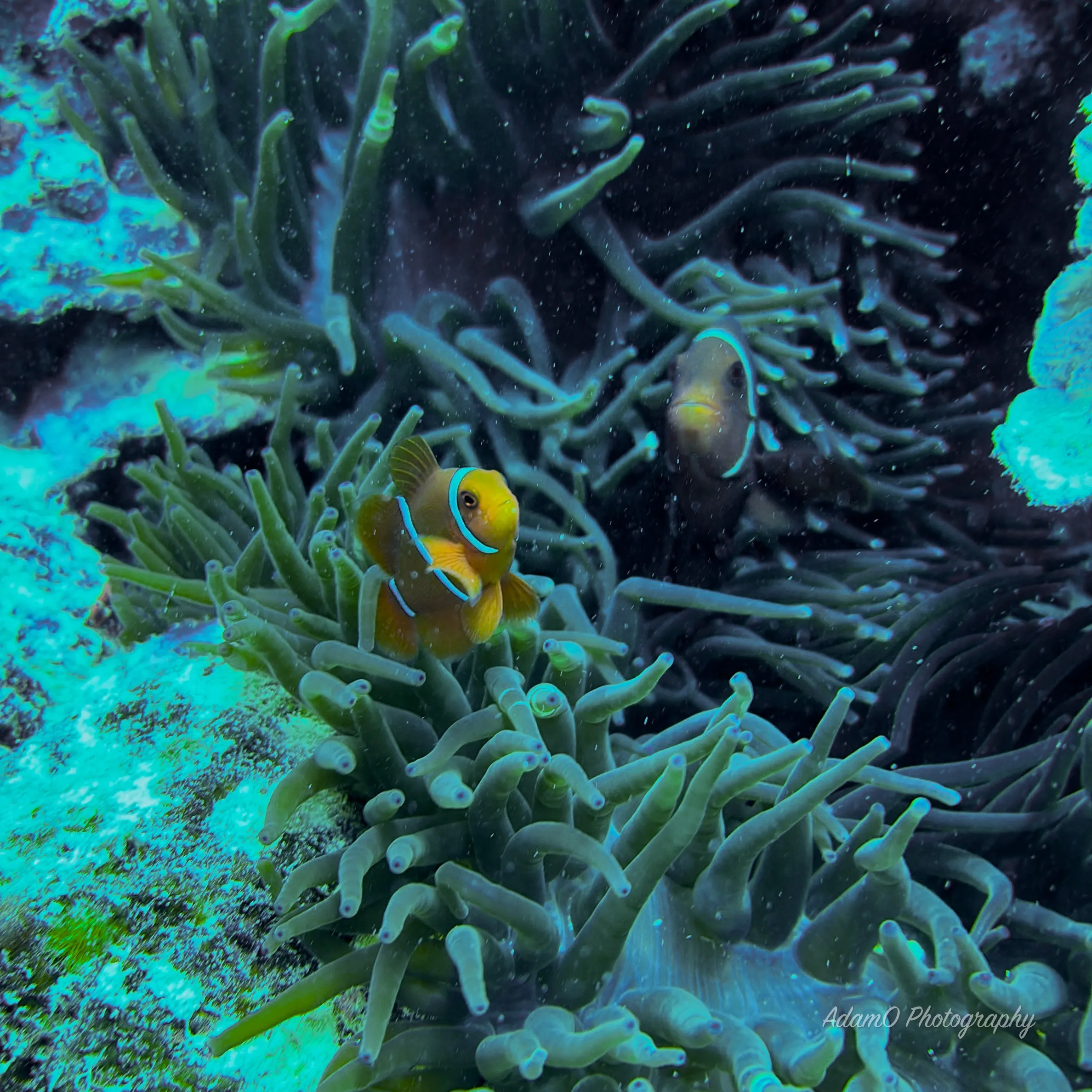
Clownfish are abundant across the reef. Check every anemone and you’re likely to see them
It’s common, but nevertheless exciting, to spot a pufferfish slowly swimming by the reef. Since they can’t move fast, puffing up is their main defence to frighten predators, although for most fish who might still take a bite, they’ll ingest tetrodotoxin which is 1200 times more poisonous than cyanide.
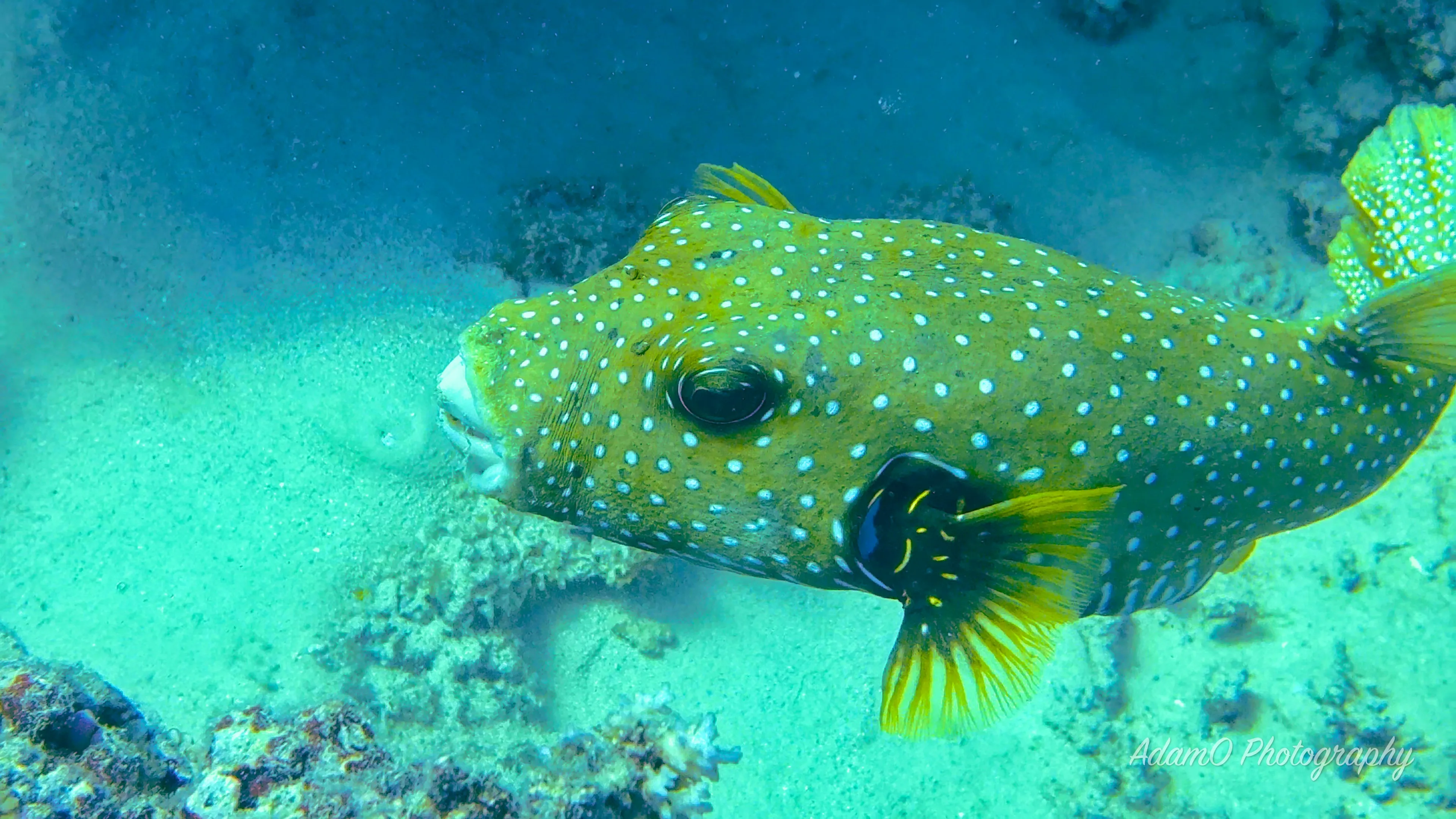
Pufferfish have continuously growing beaks to crush hard prey like clams and crabs
We considered ourselves particularly lucky to spot a number of glass shrimp, considering their bodies are entirely translucent, thanks to our eagle-eyed Dive Master Kyte. Giant clams and sea squirts were also interesting creatures to spot, as long as you know what to look out for.

Well hidden - there’s at least 5 glass shrimp in this picture
The unexpected stars of the show were 3 humpback whales - two females and a baby - passing us during our boat ride out in the morning. We were very fortunate to have Kate, the marine biologist on board, who was able to explain exactly what behaviours we were seeing, where one of the females was lifting the baby out of the water to help it take some of its first breaths. Humpback whales migrate annually for the breeding season, from Antarctic waters to the warmer, calmer seas sheltered by the Great Barrier Reef, making mid-July to October the best time to see these behemoths of the sea.
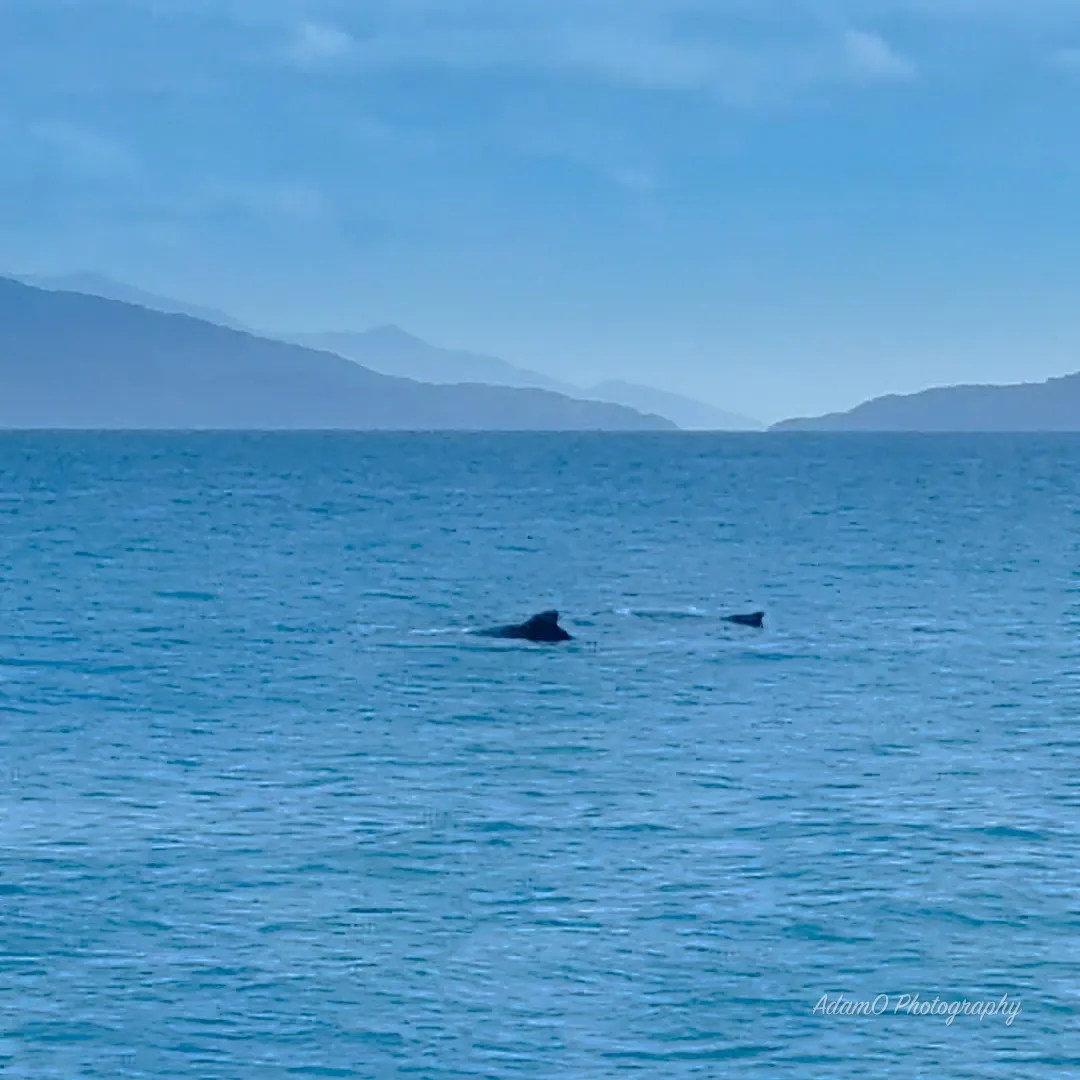
Although we didn’t get close, we could still clearly see the dorsal fin of each of the massive humpback whales
A marine biologist on every trip
Every trip with Calypso Reef Cruises has a marine biologist on board, partly to explain what’s going on if you’re lucky enough to see whales, but also to educate guests on the importance of, and the threats facing, the Great Barrier Reef.
This elevates the day trip experience by adding a much more profound understanding of what you’ll see under the waves, and why it matters so much. This trip was where we learned that the oceans produce more than half of the world’s oxygen, making them that much more valuable to protect. We also learned what coral actually is, how a reef grows, and why bleached coral isn’t the same as dead coral. We’ll be writing more on this in an upcoming blog.
Why the Great Barrier Reef matters
It’s hard to overstate how vital the Great Barrier Reef is to Australia and the world. Covering an area bigger than the UK and almost as big as Japan, and made up of over 2,500 individual reefs, it contains over 10% of the entire planet’s coral reef systems.
Its value extends to all people of Australia. It holds deep cultural and spiritual significance as part of the Sea Country for more than 70 Traditional Owner Aboriginal and Torres Strait Islander groups. It protects coastlines, regulates the climate and brings in over $9bn annually to the Australian economy.
The Great Barrier Reef is one of the most biodiverse areas in the world, supporting over 1600 species of fish, over 100 species of sharks and rays, 30 species of whales and dolphins and 6 out of 7 marine turtle species.
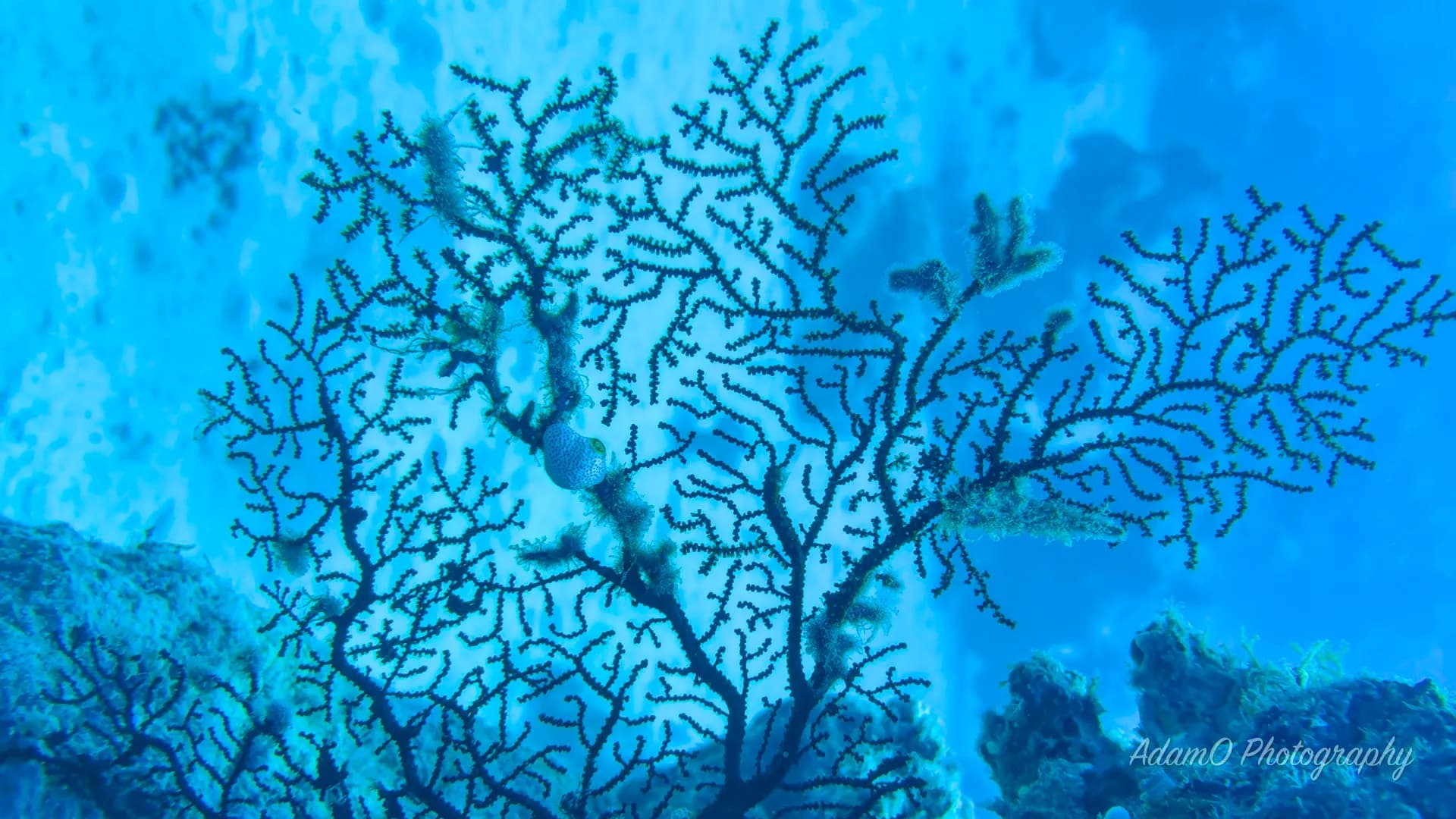
There’s no shortage of fascinating coral structures wherever you visit the Great Barrier Reef
Is diving the Great Barrier Reef bad for the reef?
The impact of scuba diving or snorkelling on coral reefs is debated, especially when there’s a fuel-intensive boat ride required to get to the sites.
On the one hand, any visitor has a real impact on the reef, and how big that impact is depends on how well the operator respects it. The risks can include anchor damage, tourists breaking corals and even sunscreen chemicals building up in the corals which can lead to bleaching in severe cases. Boats also burn a lot of fuel, and until there’s wide adoption of electric dive vessels, this is an unavoidable problem no matter how responsible the operator is.
Fuel aside, the localised risks can be mitigated by operators who make the effort to protect the reef and educate their guests, and as far as we could see, Calypso made this effort. Thorough safety briefings, small group sizes and a dedicated swim platform minimised the chance of damage or stress to marine life. Without a swim platform, jumping straight into the water risks directly hitting fish or delicate coral structures.
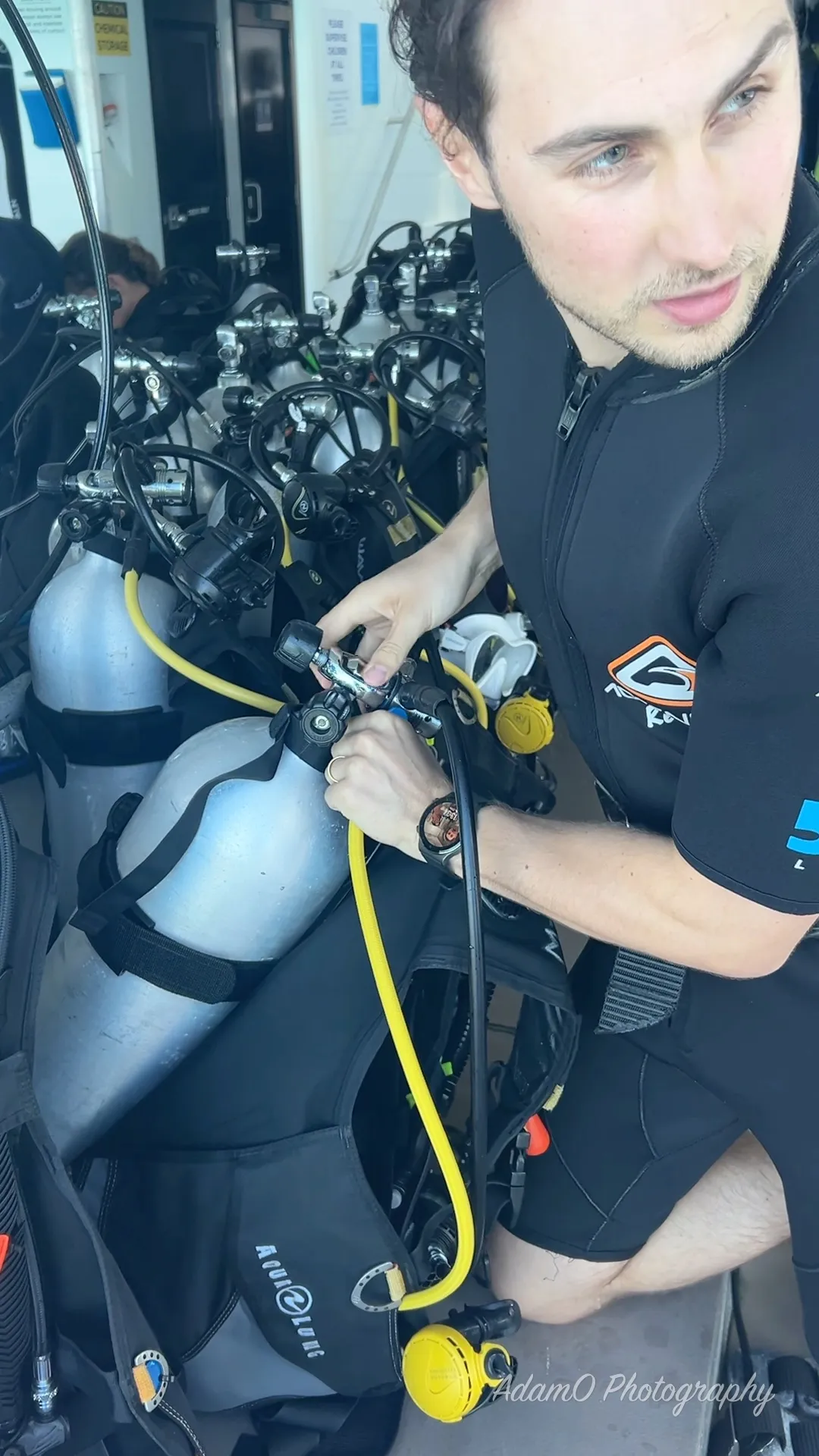
The dive masters are on hand to help you with the scuba gear, so don’t worry if you’re a little rusty
The advantages of snorkelling or diving the Great Barrier Reef, in our opinion, outweigh the negative impacts. Seeing the biodiversity and beauty of this underwater world for yourself, in person, is the best way to truly appreciate how special it is and how important it is that we protect it.
Research has frequently found that less-educated citizens are more skeptical about climate change and show less trust in climate science than their more-educated counterparts.
Often, environmentally-irresponsible individual behaviour is due to a lack of education and exposure to the natural world. With the added bonus of the marine biologist’s talk, and Advanced Ecotourism certification this makes the trip an opportunity to really understand and appreciate what makes the Great Barrier Reef so vital to all of us.
We strongly recommend diving or snorkelling the Great Barrier Reef with Calypso Reef Cruises, and firmly believe that the environmental benefits of understanding this crucial ecosystem outweigh the (well-managed) risks. Calypso offer a fantastic and relatively sustainable way to see the reef for snorkellers and divers of any experience level, as long as you can manage the 90 minute boat ride, and we’d definitely book with them again.
Sources (13)
- [1]Port Douglas Reef Cruises | Reef Tours | Snorkel | Dive Trips · calypsoreefcruises.com
- [2]Reef Protection · calypsoreefcruises.com
- [3]Clownfish Facts · barrierreef.org
- [4]Amazing Facts About The Puffer Fish · scuba-legends.com
- [5]Why do humpback whales migrate? · barrierreef.org
- [6]Whale watching in Queensland · queensland.com
- [7]Does the ocean produce oxygen? · whoi.edu
- [8]What is coral bleaching? · oceanservice.noaa.gov
- [9]The Great Barrier Reef explained: size, species, threats and why it matters · barrierreef.org
- [10]70 Traditional Owner · gbrmpa.gov.au
- [11]The Reef is too precious to lose — and too big to fail · barrierreef.org
- [12]Great Barrier Reef: Why It Matters & How We Can Protect It · wwf.org.au
- [13]Research · sciencedirect.com
Enjoyed this? Get more.
Honest travel stories and conscious travel inspiration, straight to your inbox.
Gallery
Related reading

Adam & Bella
We're building Be TravelKind after an elephant sanctuary taught us how small travel choices can have a big impact on people, animals and the planet.
Read our story →Try KindScore
Rate any travel activity's ethical impact — sustainability, animal welfare and community — in seconds.
Rate an activity →
Quick check
We just need to check you’re human before you carry on.
Comments
Loading comments…