Some links here are affiliate links. If you book through one, we earn a small commission at no extra cost to you, which helps keep TravelKind and KindScore free. They never affect our ratings or recommendations.
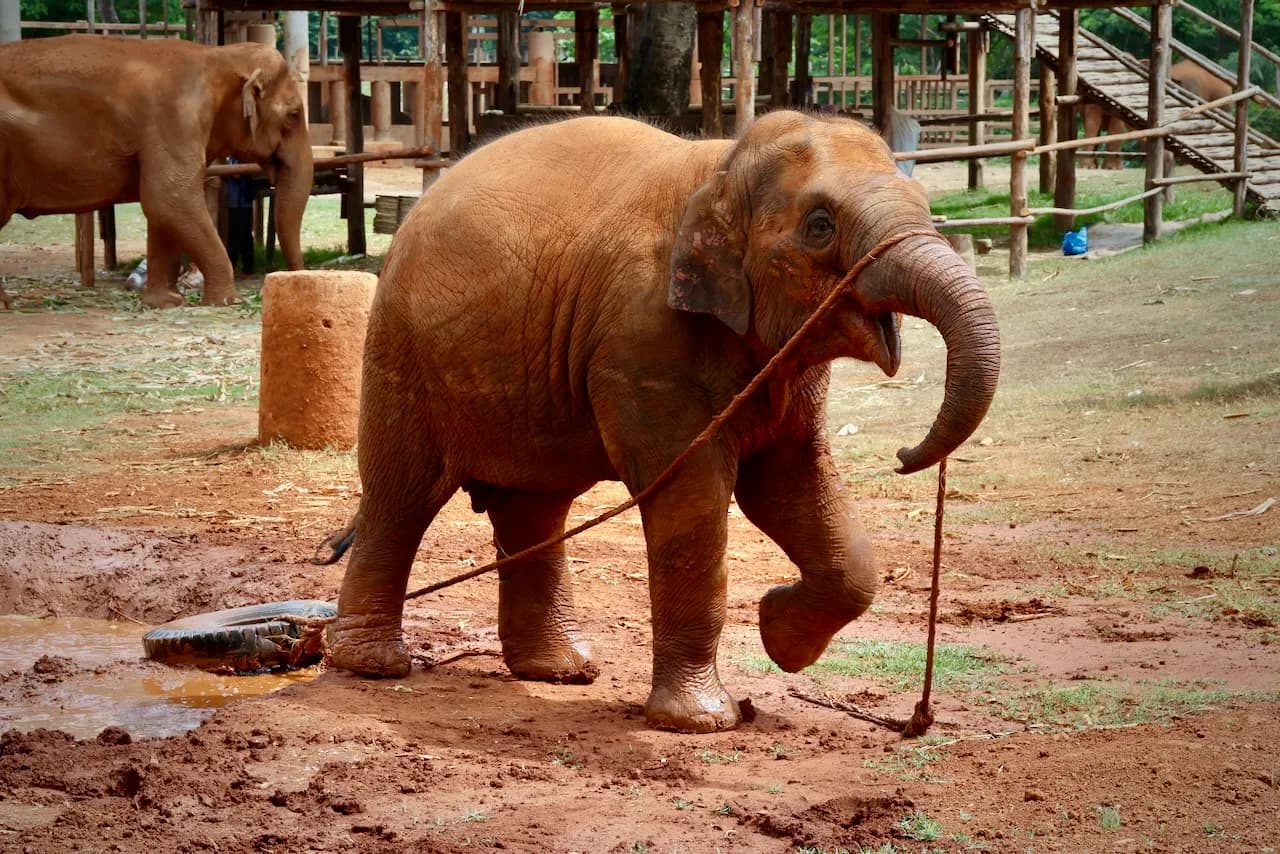
Right in front of our group, just 50m away, a baby elephant has a rope over its head. At first, we can’t figure it out - is he restrained somehow? Then he shakes the rope from his head, grasps it in his trunk and walks towards us pulling his favourite toy, a tyre, on the end of the rope. Once or twice, he accidentally drops the rope, then looks around for it and quickly takes it up again so he can continue playing, swinging his tail. Experiencing the childish joy of this young elephant playing is a moving experience; one that teaches us how similar elephants are to us, and how important it is that they’re respected and allowed to freely express themselves.
A baby elephant lifts a foot as it plays with its tyre on a rope
•
Price: We paid 3,500 THB per person for the full day SkyWalk visit, including hotel transfer
◦
Half day visits (morning or afternoon): 2,500 THB per adult
◦
Full day visits (SkyWalk, Sunshine for Elephants, Walking with Elephants): 3,500 THB per adult
◦
Elephant Highlands and Care for Elephants: 6,000 THB per adult
◦
Children aged 3 to 11 pay half price on most programmes, and under 3s pay a quarter
•
Schedule: Hotel pickup from 7:30am for morning and full day visits, back in Chiang Mai around 4:30 to 5pm
◦
Afternoon half day pickup is from 12pm
◦
Morning and full day visits include a vegan buffet lunch
◦
Afternoon half day visits include snacks, fruit and soft drinks
•
Getting there: Hotel transfer from Chiang Mai city is included and takes around one hour
•
Interaction: No riding, bathing or hand-feeding. You watch the elephants from a respectful distance, and prepare fruit snacks that the mahouts take to them
•
Age limits: Walking with Elephants, Elephant Highlands and Care for Elephants don't take children
•
What to bring: Comfortable shoes that you don’t mind getting muddy, sunscreen, a hat and a camera - you’re going to want to take photos
•
Booking: Book directly at elephantnaturepark.org. The park warns that copycat camps use similar names, and that some hotels and drivers falsely claim it's closed
We visited in May 2026, and these facts were checked in November 2026.
The park’s oldest elephant
Elephants understand, remember and form relationships in a similar way to humans, which can be hugely beneficial or detrimental depending on how they’re treated. This is Somboon, the oldest elephant at the sanctuary. She was rescued after decades working in the logging industry, and later giving rides to tourists. She’s around 90 years old and our guide told us she suffers from PTSD from her past abuse, so she has her own area of the park, with her own shelter, mud bath and food, which was described as a 5 star elephant hotel.
Somboon, the park's oldest elephant at around 90, in her own area after decades of logging and tourist rides
From camps to sanctuaries
Elephants like Somboon were used for labour because of their immense size and strength, although Thailand banned their use in logging in 1989. Since then, many elephants were moved to the tourism industry in camps where tourists can ride, touch, bathe and feed them. Sanctuaries like Elephant Nature Park are created to rescue the elephants from these conditions and give them a safe home, where tourists can observe the rescued elephants, young and old, living out the rest of their days in peace.
A young elephant and an older companion, both caked in red mud
If a camp allows visitors to touch, wash or feed elephants at set times, it’s likely because they’ve trained the elephants for these routines, which is against their nature and may have involved harmful training techniques such as hooks in their ears to control them. This isn’t something the tourists will necessarily see, but you can tell if the elephants appear happy, or are forced to do certain things at certain times.
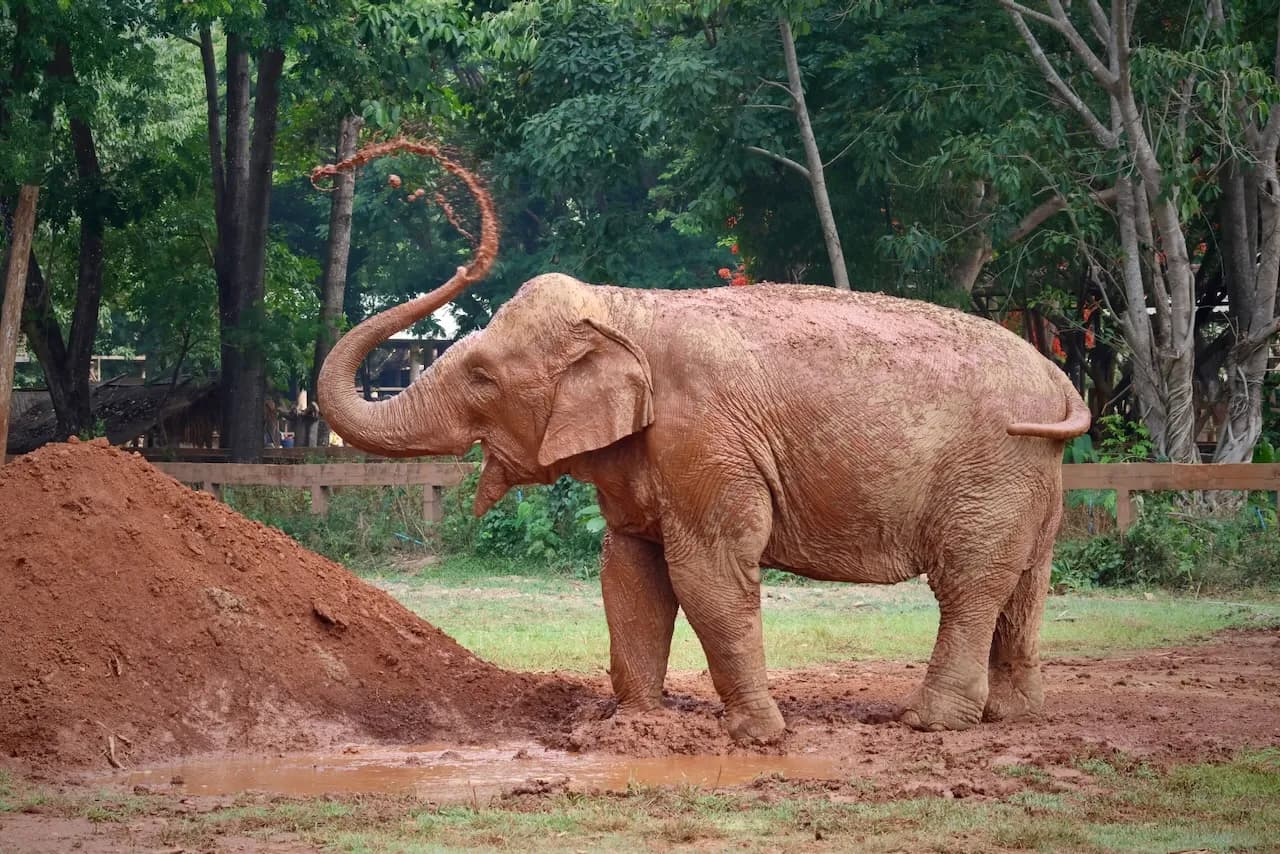
An elephant flicks wet mud over its back with its trunk, which keeps it cool in the heat
Healthy elephants are happy elephants
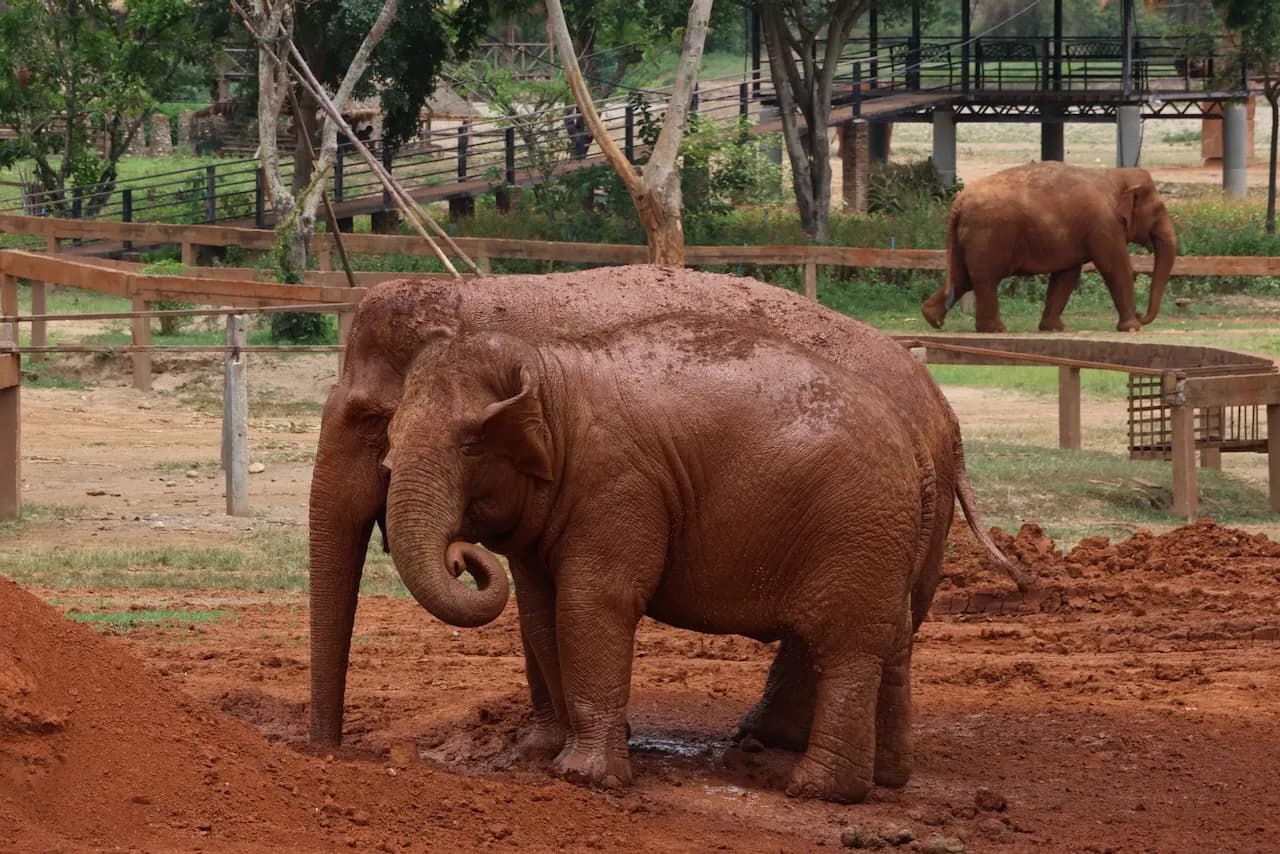
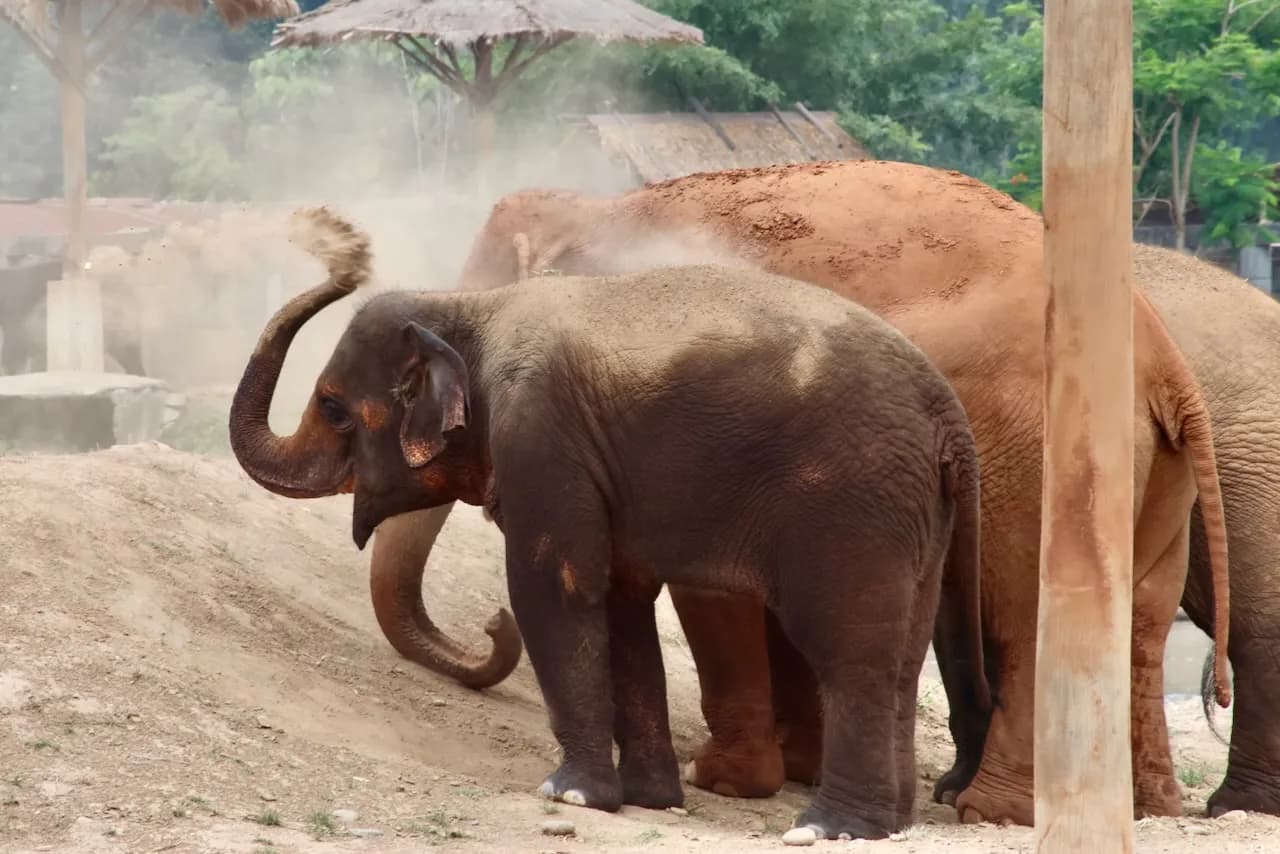
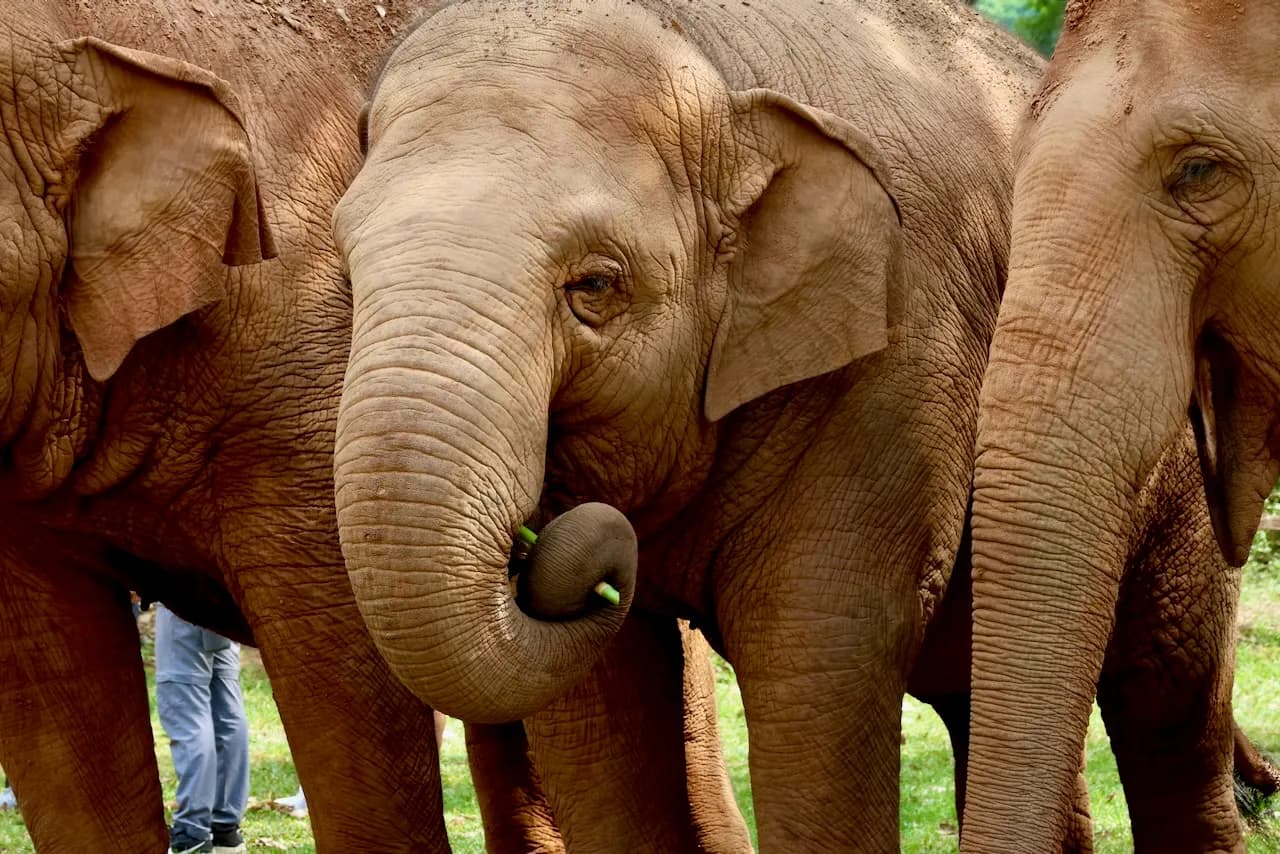
You might have noticed that a lot of the elephants in our photos appear red. This isn’t their actual skin colour - they throw dirt over themselves, which helps to cool them and acts as a natural sunscreen.
A younger elephant still shows its natural dark grey skin as it throws dust over its back, beside companions already coated red
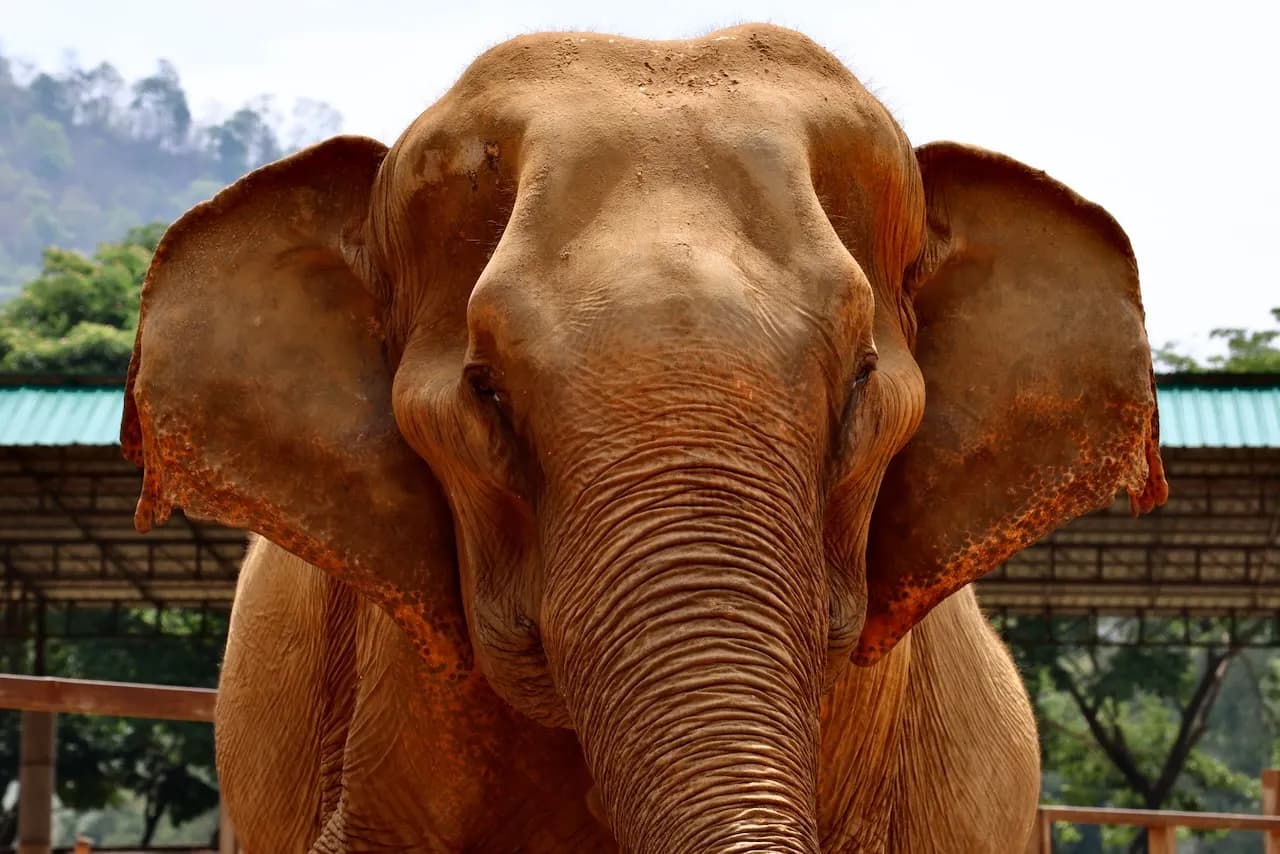
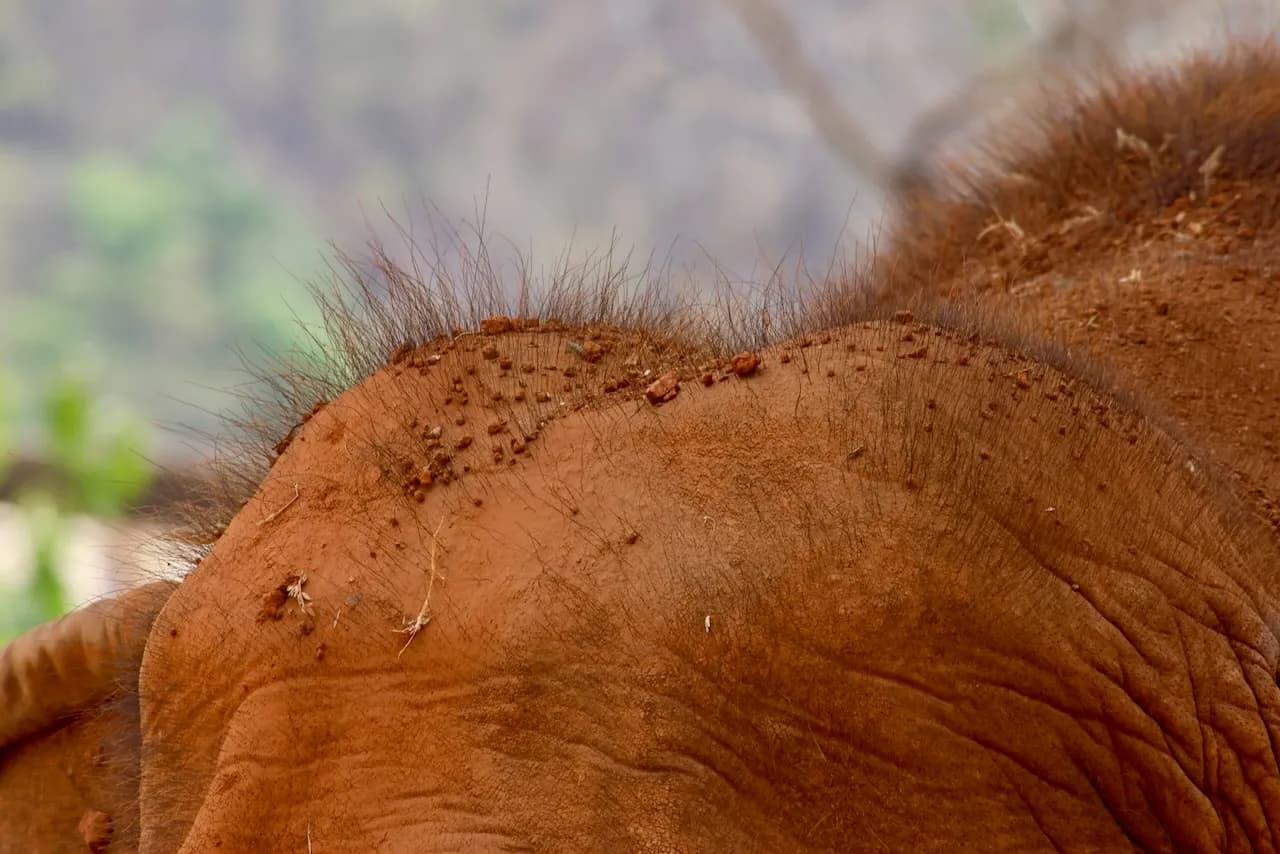
You can see how much mud is on top of this elephant’s head. This is another reason why letting tourists wash elephants constantly throughout the day isn’t actually what’s best for them. Elephant Nature Park stopped allowing tourists to bathe the elephants in 2018.
Elephants don’t need tourists to bathe them. They have trunks for this.
Clumps of dried earth caught in the bristly hairs on top of an elephant's head
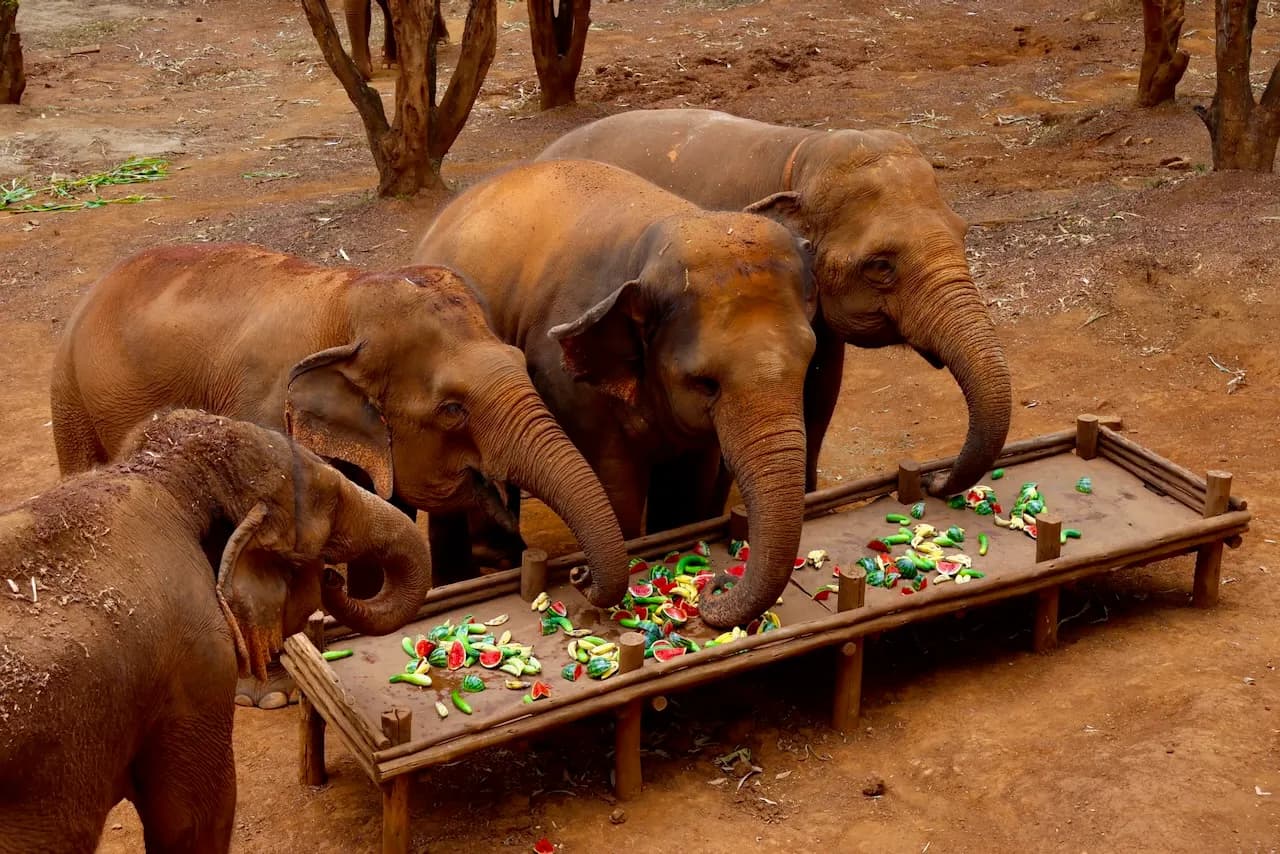
Elephants naturally spend from 12 to 19 hours a day eating, and in that time can consume up to 150kg of food. While a lot of this is grasses and leaves, they also love fruits as snacks. You can’t directly feed the elephants at this sanctuary, as this can habituate them to tourists. Instead, we were able to prepare a snack for them, filling up buckets of cucumbers, bananas and watermelons, which their mahout delivers to them - the elephants didn’t let a single fruit go to waste.
Four elephants clearing a wooden trough of the fruit we helped prepare
It’s important for elephants to be entertained, especially the babies. Elephants wag their tails when they’re happy, just like dogs, which is exactly what we saw while watching the baby elephant playing with its toy tyre.
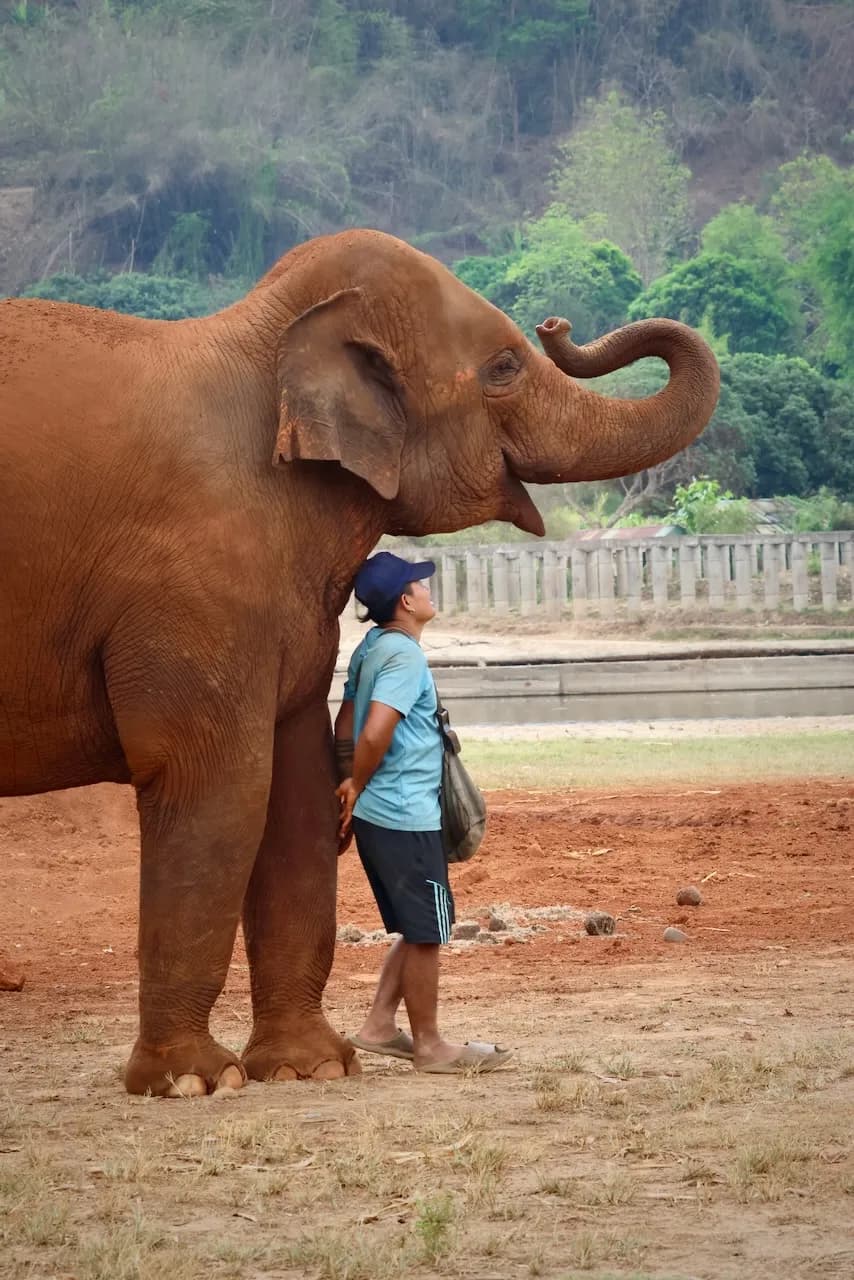
As well as entertainment, elephants are social animals that value companionship. Many of the elephants in the sanctuary wander around in their friendship groups, and every elephant has its own mahout - a human carer - many of whom stay with the same elephant for years and form a strong bond.
An Elephant Nature Park mahout stands close beside the elephant in their care as it raises its trunk
Is Elephant Nature Park ethical?
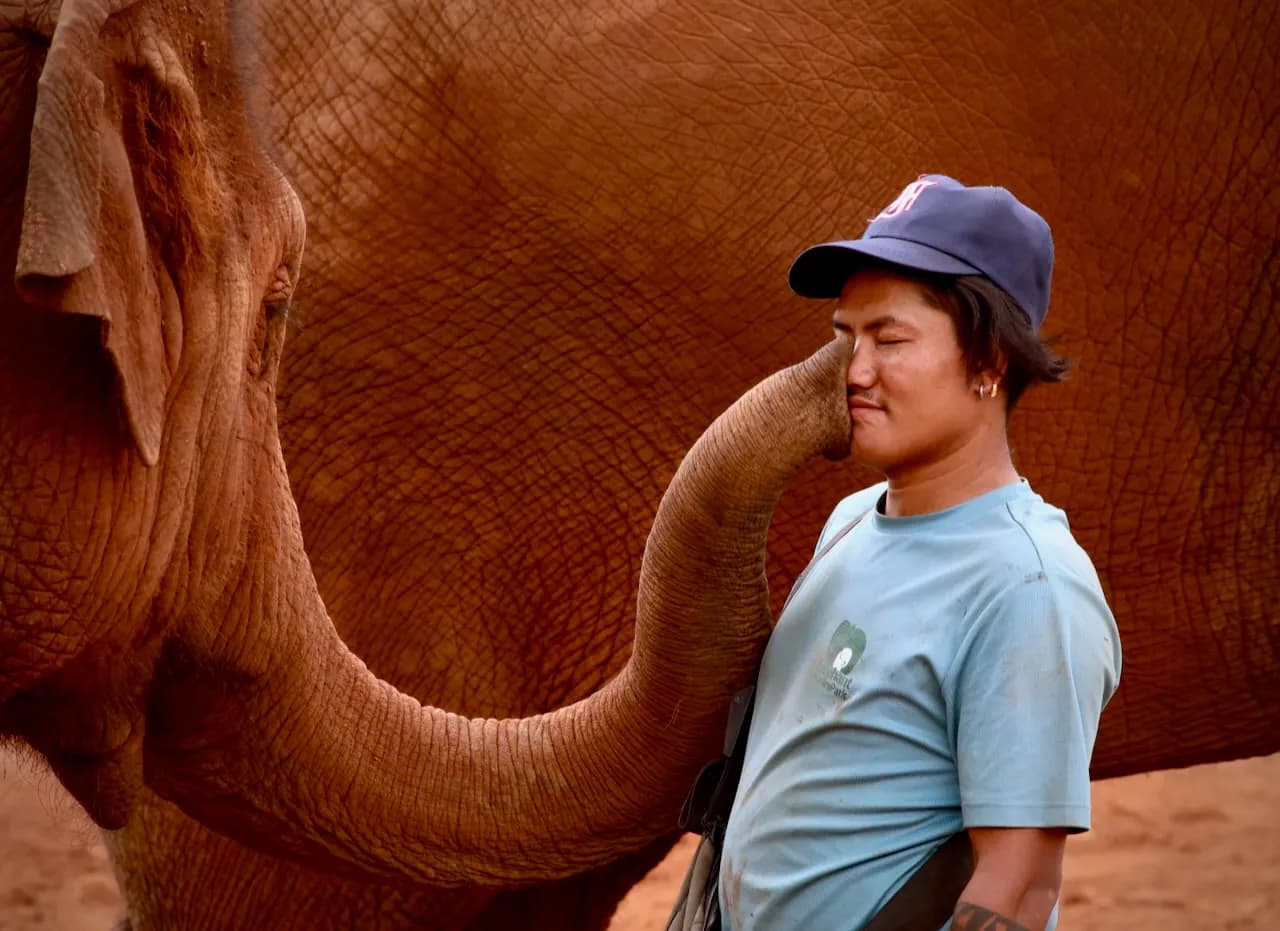
Our view is that Elephant Nature Park genuinely strives to provide the best possible care for the elephants, and prioritises their welfare above the tourism experience. We saw no evidence of mistreatment from any of the staff, and a lot of reassuring signs of truly strong bonds between elephant and mahout, including an elephant giving their mahout a “kiss”. The park told us they’re strictly observation-only, and taught us the dangers of riding or bathing elephants, without lecturing us.
It is worth mentioning that, for many elephant parks, this question is extremely hard to answer. Many elephant parks can claim to be ethical, or call themselves a sanctuary, without any regulation over their welfare practices. The bad practices can often be hidden from tourists, too.
An elephant presses the tip of its trunk to the cheek of its mahout
Elephant Nature Park is widely recognised as one of the most ethical elephant sanctuaries in Thailand, and has been rescuing elephants from abuse in logging camps and tourist traps for over 20 years, rehoming over 100 elephants. The point of a sanctuary like this is to let the elephants live as naturally as they want, and the tourists are simply there to observe. The park has even had celebrity visits from the likes of Coldplay, Leonardo DiCaprio, Brad Pitt and Angelina Jolie.
KindScore — Rating of impact to people, animals and planet
Visit Elephant Nature Park sanctuary in Chiang Mai
Sanctuary delivers strong animal welfare through rescue, veterinary care, and natural habitat; employment and fundraising benefit local communities; visitor education impact unclear but bathing practices pose minor stress risks.
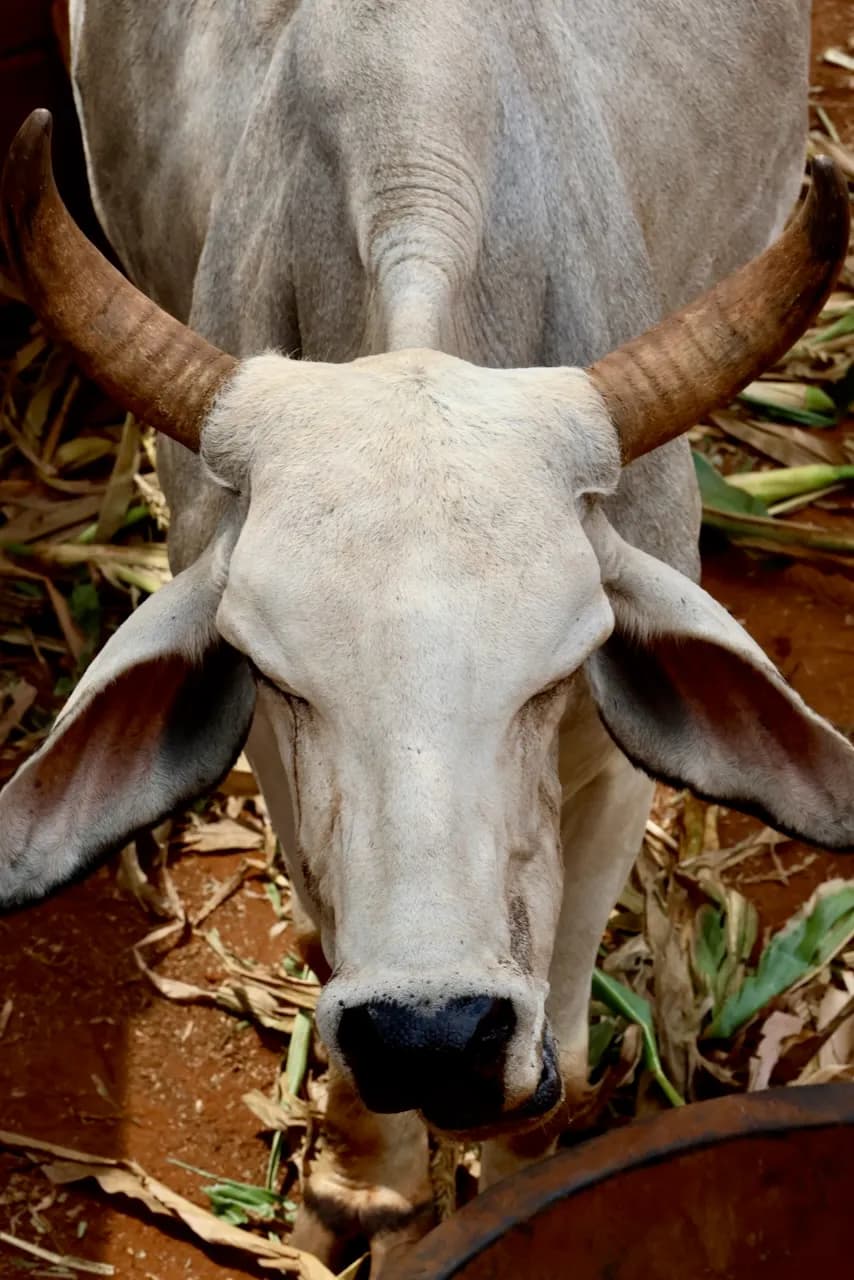
While the elephants are obviously the main reason Elephant Nature Park was founded, they also rescue other animals, including oxen, dogs and cats. It’s fascinating to see these animals interacting so calmly, such as oxen and elephants contently sharing food.
One of the oxen the park has rescued, standing among leftover leafy stalks
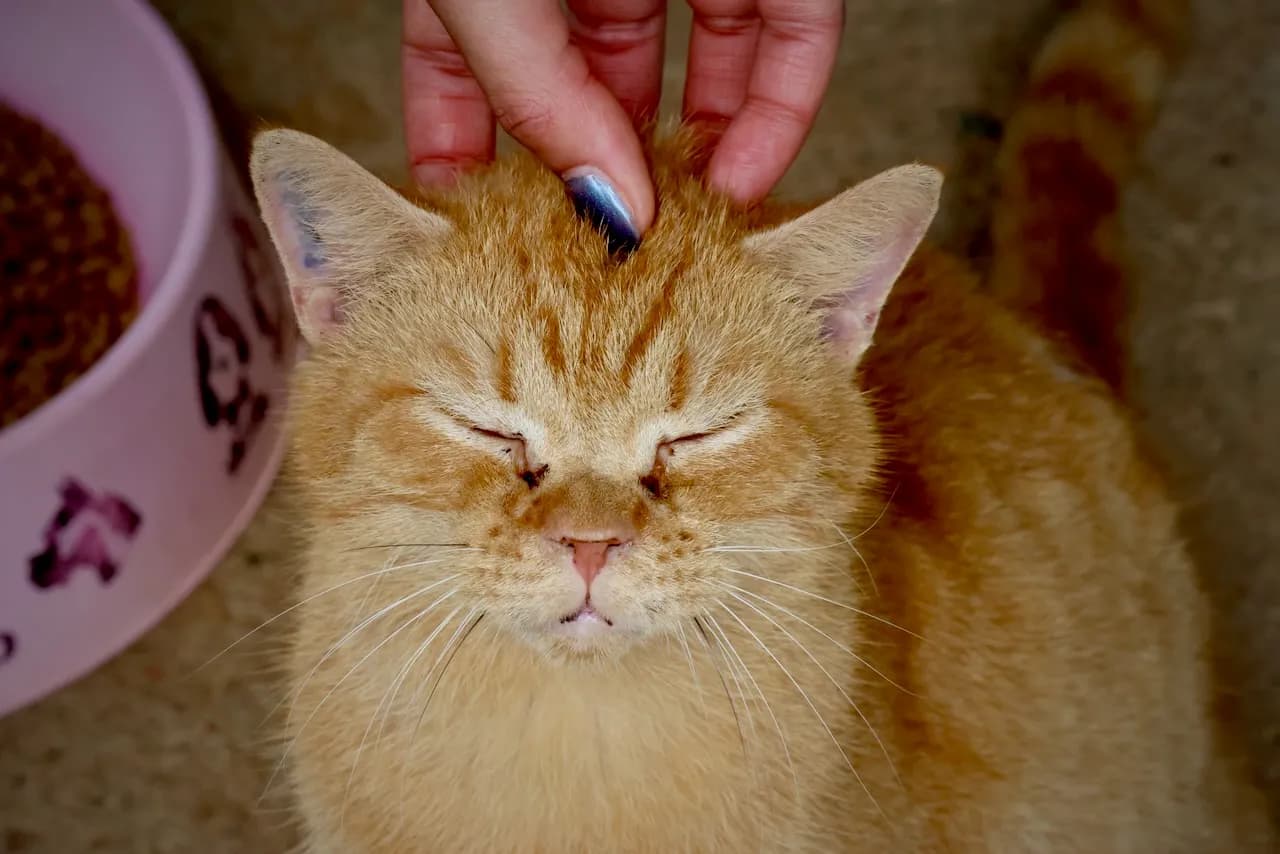
They had a dedicated area for the cats, full of climbing posts, food bowls, beds and water features, with hundreds of cats roaming freely and happily together. Some of them were particularly keen for attention, following us around and meowing until we stroked them. If you’re a cat lover, this is an ideal place to surround yourself with cats to your heart’s content.
One of the cats that followed us around, meowing until we gave it a stroke
How to tell if an elephant sanctuary is ethical
Elephant Nature Park was an absolute pleasure to visit. There are other ethical elephant sanctuaries in Thailand and across Asia, but it can be tricky to know what’s truly “ethical”, so here are a few quick tips we learned from our day at the sanctuary:
•
A “sanctuary” is usually set up to protect the elephants, whereas a “camp” is set up to provide entertainment or labour. This isn’t always the case, and “sanctuary” isn’t a regulated word across most of the world, as we discuss in our blog post on Billabong Sanctuary.
•
If you can freely bathe, feed or touch the elephants, it’s probable they’ve been trained to accept this, potentially with cruel training methods.
•
Holes or damage to elephants’ ears can be a sign that hooks have been used to train them - of course, you may see this in an ethical sanctuary if they’ve been rescued from a camp.
•
Read reviews, particularly the negative reviews - many tourists may not know what to look out for, but if there are unethical practices, somebody will have noticed. Note that businesses are competitive and may publish false reviews of each other, so take reviews with a pinch of salt.
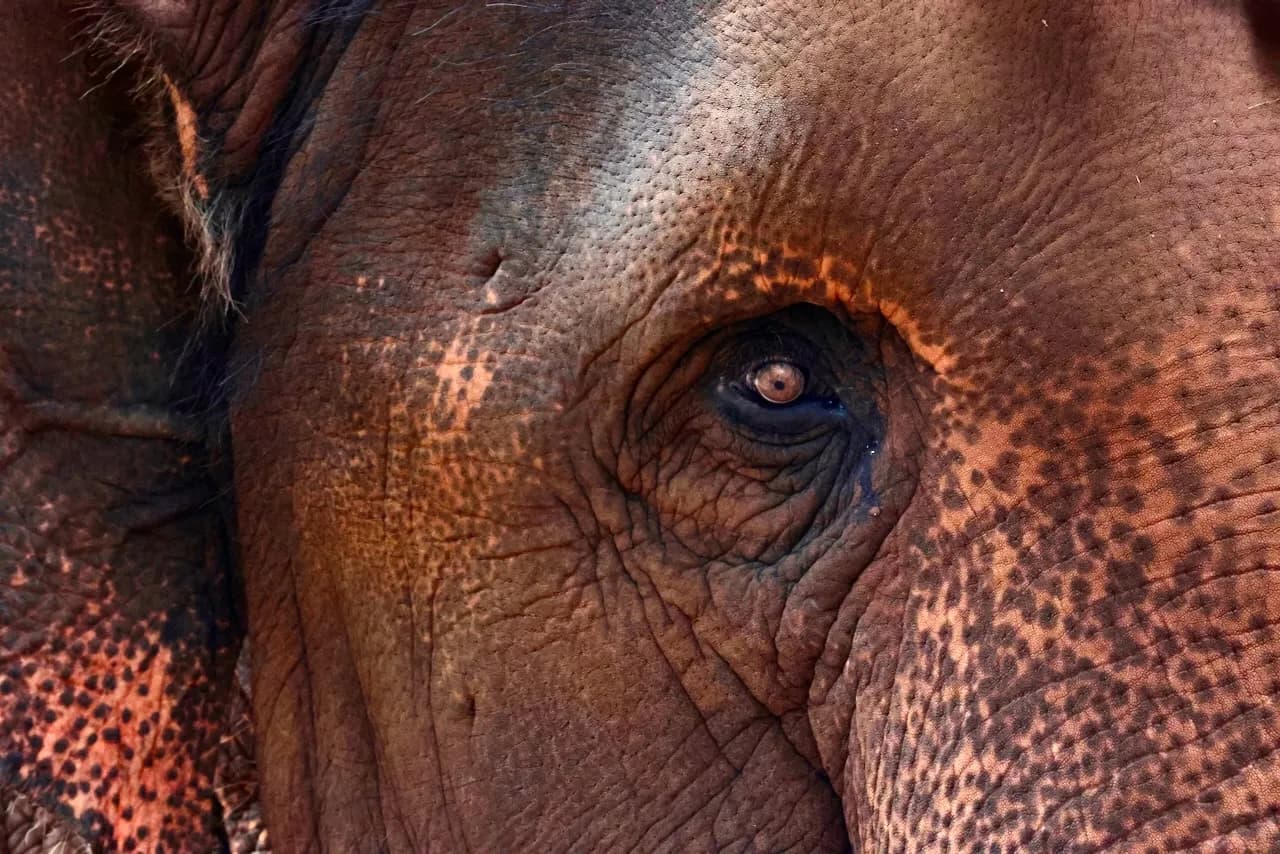
A close look at an elephant's eye and wrinkled skin, still dusted with red earth
If you're in Chiang Mai, we'd highly recommend a visit to Elephant Nature Park. Make sure to book with the park directly. And wherever you’re travelling, remember you can check any wildlife experience with KindScore before you book. Have you visited an elephant sanctuary, and do you think it was ethical? Let us know in the comments below.







Quick check
We just need to check you’re human before you carry on.
Comments
Loading comments…